CECIL ARCHBOLD

  • Home
  • On Camera
  • Voiceover
  • Cecil Sez Blog
  • Podcast
  • Contact
cecil@archboldmediaservices.com
708.794.8444
Archbold Media Services On-camera Actor, Voice Actor, Blogger, Podcaster Branding Logo

ARCHBOLD MEDIA SERVICES

Cecil Archbold

5 Time Management Tricks I Use to Juggle Business, Family, and Self-Care (Without Losing My Mind)


December 26, 2025 by Cecil Archbold

5 Time Management Tricks I Use to Juggle Business, Family, and Self-Care (Without Losing My Mind)

graphic showing a voiceover booth with laptop and microphone-5 Time Management Tricks I Use to Juggle Business, Family, and Self-Care (Without Losing My Mind)
voiceover microphone with pop filter - 5 Time Management Tricks I Use to Juggle Business, Family, and Self-Care (Without Losing My Mind)
generative ai digital tool work desk - 5 Time Management Tricks I Use to Juggle Business, Family, and Self-Care (Without Losing My Mind)

If you’ve ever looked at your calendar and thought, “Who scheduled all of this… and why was it me?” — welcome. You’re among friends.

Between voice acting, on-camera work, blogging consistency, client outreach, auditions, entrepreneurship, family responsibilities, hitting the gym and the occasional attempt at rest, time management isn’t a “nice to have” for me — it’s survival equipment.

I’ve worked in automotive sales, printing sales, and now full-time creative work. Each chapter of my creative journey has taught me the same lesson over and over again: time doesn’t magically organize itself. If I don’t tell it where to go, it disappears.

In this post, I’m sharing five time management tricks I actually use — not guru advice, not hustle culture nonsense, and definitely not “wake up at 4:30am and drink celery juice” energy. These are real-world strategies that help me balance business, family, and self-care while staying sane, creative, and (mostly) motivated.

The Challenge of Wearing Multiple Hats

Creative professional balancing multiple roles and responsibilities - 5 Time Management Tricks I Use to Juggle Business, Family, and Self-Care (Without Losing My Mind)

I don’t just wear one hat. I wear several — sometimes at the same time.

On any given week, I might be:

  • Recording voice acting auditions from my home studio
  • Connecting with clients through cecilarchboldvo.com
  • Managing business strategy and marketing through archboldmediaservices.com
  • Writing blog posts like this one (hello 👋🏾)
  • Learning new tools, building new digital tools and acquiring knowledge in generative AI to stay competitive
  • Being present for family, relationships, and life outside of work

The tricky part isn’t that any one of these things is hard on its own. It’s that they all want your attention at the same time.

Early on, I learned that if I didn’t create structure, I’d end up:

  • Working all the time
  • Feeling behind all the time
  • And somehow still feeling like I wasn’t doing “enough”

That’s when I started building systems instead of relying on motivation.

Trick #1: I Write Everything Down (Yes, Everything)
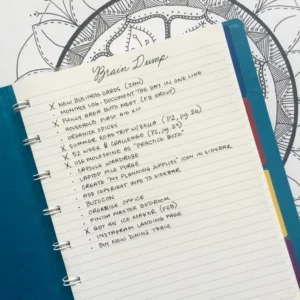
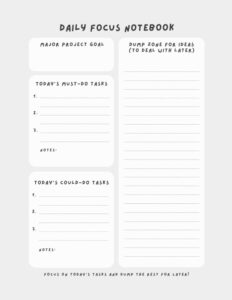
Daily to-do list and planner used for time management - 5 Time Management Tricks I Use to Juggle Business, Family, and Self-Care (Without Losing My Mind)

If it’s not written down, it doesn’t exist. At least not reliably.

For years, I told myself, “I’ll remember that.”
Spoiler alert: I didn’t.

Now, I use a simple system:

  • A running to-do list
  • A weekly priority list
  • And a daily “must-do” short list

Why this works for me:

  • My brain doesn’t have to hold everything
  • I reduce decision fatigue
  • I can see what actually fits into a day

My Rule of Three

Each day, I pick three non-negotiable tasks:

  • One business task (auditions, outreach, editing)
  • One personal or family task
  • One self-care or maintenance task

If those three get done, the day is a win — even if everything else rolls over.

This approach has helped me stay consistent with blogging, voice acting, and long-term creative goals without burning out.

Trick #2: I Time-Block My Creative Work

Time-blocked calendar for creative and business work - 5 Time Management Tricks I Use to Juggle Business, Family, and Self-Care (Without Losing My Mind)

Creative work doesn’t like being rushed. It also doesn’t love being interrupted.

That’s why I time-block my schedule — especially for voice acting and writing.

Instead of saying “I’ll record auditions sometime today,” I schedule:

  • Audition block: 10:00–12:00
  • Editing or admin block: 1:00–2:00
  • Outreach or learning block: 3:00–4:00

Why this matters in voice acting:

Voice acting requires:

  • Focus
  • Energy
  • Emotional presence

Trying to squeeze auditions between emails and errands leads to weaker performances. When I protect that time, the quality of my work improves — and so does my confidence.

Time-blocking has also helped me maintain blogging consistency, which is critical for SEO and long-term visibility across my websites.

I must say that while I make a strong effort to time block, sometimes the blocks don’t always stack up neatly.  When quick turn-around auditions or jobs come up, adjustments have to be made!

Trick #3: I Separate “High-Energy” and “Low-Energy” Tasks

Exhausted Entrepreneur - 5 Time Management Tricks I Use to Juggle Business, Family, and Self-Care (Without Losing My Mind)

Not all hours are created equal.

Some parts of the day I’m sharp, focused, and creative. Other times… not so much. Instead of fighting that, I work with it.

High-energy tasks:

  • Voice acting auditions
  • On-camera audition prep
  • Writing blog content
  • Strategy and creative thinking

Low-energy tasks:

  • File organization
  • Admin work
  • Light research
  • Updating systems or templates

This Changed Everything

Once I stopped forcing creative work into low-energy moments, I:

  • Felt less frustrated
  • Produced better work
  • Stopped blaming myself for “lack of discipline”

This mindset shift alone has been huge for my creative journey — especially as I integrate new tools like generative AI and app development into my workflow.

Trick #4: I Schedule Family Time Like a Meeting

 Balancing family time and professional life intentionally - 5 Time Management Tricks I Use to Juggle Business, Family, and Self-Care (Without Losing My Mind)

This one took me a while to learn.

When you work for yourself, it’s easy to say, “I’ll stop when I’m done.”
The problem? You’re never done.

Now, I literally schedule:

  • Family time
  • Personal time
  • Time away from screens

And I treat those blocks with the same respect as client work.

Why this matters:

  • Family time becomes intentional, not leftover
  • Guilt decreases on both sides
  • Work doesn’t bleed into everything

Ironically, protecting personal time has made me more productive, not less. When I come back to work, I’m clearer, calmer, and more focused.

Trick #5: I Build Systems Instead of Relying on Motivation

Simple workflow system supporting creative business consistency- 5 Time Management Tricks I Use to Juggle Business, Family, and Self-Care (Without Losing My Mind)

Motivation is unreliable. Systems are not.

I don’t wait to feel like:

  • Working out
  • Blogging
  • Marketing
  • Learning new skills
  • Improving my voice acting business

I build systems that make those things easier to start and harder to avoid.

Examples:

  • Pre-preparation for hitting the gym and working out
  • Blog outlines planned in advance
  • Templates for outreach emails
  • File organization systems for auditions
  • Dedicated learning blocks for AI and digital business tools

This is especially important as the creative industry evolves. Staying competitive today means embracing tools like generative AI while still protecting the human creativity that clients actually hire me for.

Systems allow me to do both.

Why Balance Is the Key to Longevity

I’ve seen talented people burn out. I’ve felt it myself.

The goal isn’t to do everything.
The goal is to do the right things consistently.

For me, that means:

  • Showing up prepared for auditions
  • Being present for family
  • Taking care of myself
  • Building a sustainable creative business

Time management isn’t about squeezing more into your day. It’s about making room for what matters — and letting go of the rest.
It's all about balance - 5 Time Management Tricks I Use to Juggle Business, Family, and Self-Care (Without Losing My Mind)

Final Thoughts (and an Invitation)

If you’re juggling business, creativity, family, and self-care, I’d love to hear from you.

  • What time management tricks actually work for you?
  • What’s been the hardest part of staying consistent?
  • Are there topics you’d like me to cover in future posts?

👇🏾 Drop a comment below — I read them, and I respond.

If you found this helpful, consider following the blog here on archboldmediaservices.com
and checking out my voice acting work at cecilarchboldvo.com.

More posts coming soon — and this time, I’m sticking to the schedule 😉

 

Filed Under: Uncategorized

How Automotive Sales Taught Me to Act

November 5, 2025 by Cecil Archbold

Blog banner featuring Cecil Archbold Jr. as both a car salesman and an actor, symbolizing how automotive sales taught him to act. Blog title text reads ‘How Automotive Sales Taught Me to Act

What Acting and Car Sales Have in Common

If you told me years ago that my time on a dealership floor would prepare me for performing on camera, I might’ve laughed and offered you a brochure for the latest model instead. But looking back now — after years in both worlds — I realize that selling cars and acting aren’t just distant cousins. They’re practically siblings. Both require emotional intelligence, storytelling, adaptability, and the ability to read people like a book that’s missing a few pages.

I didn’t plan for it to turn out this way. My paths just sort of merged, like two lanes on a well-paved highway (minus the occasional pothole of rejection). Whether I’m delivering a heartfelt commercial read or working with a shopper to help them find their perfect vehicle, I’m tapping into the same skill set — human connection.

Let’s pop the hood on how these two worlds overlap — and why, if you can sell a car, you might just have the chops to command a performance in front of a camera or behind a microphone.

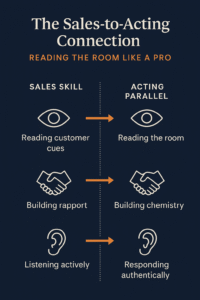
Reading the Room Like a Pro

When you’ve spent years in automotive sales, you get pretty good at reading people — not in a psychic way, but in a “I can tell you’re not buying anything today, but I’ll still treat you like you are” way.

In sales, the first few seconds matter. You’re gauging posture, tone, word choice. Are they cautious? Confident? Curious? You learn to pick up micro-expressions — that flicker of excitement when they spot a car that speaks to them, or that subtle eye-roll when they realize the payment might not fit their budget. You adapt your approach in real time, like a jazz musician riffing off a melody you didn’t plan.

When I transitioned into acting, I realized: this is the same skill — just applied differently. Whether it’s walking into an audition or working on set, you’re reading the room, feeling the energy, and adjusting your performance to fit the moment.

A director might give you minimal direction but expect you to read between the lines. The casting assistant might smile politely, but you can tell whether they’re truly engaged. The audience — whether it’s one person or one million — senses authenticity, just like a customer does.

Both fields demand emotional intelligence. You’re not just selling a car or performing a script — you’re connecting. You’re trying to understand what someone wants to feel, and then helping them feel it.

Reading The Room Like a Pro-The Sales to Acting Parallel

💡 Acting and sales both reward empathy — the ability to see the world through someone else’s eyes and respond in kind.

Here’s how I demonstrate the connection skill that drives my work.  No Second Guessing.
External reading break: Harvard Business Review’s piece on “Emotional Intelligence Has 12 Elements. Which Do You Need to Work On?”

Storytelling Sells

At its core, every sale — and every performance — is a story.

In the showroom, I’m not talking about vehicle features.  I’m painting a picture:
“Imagine hopping into your car and heading to work in the morning.  You’re full of confidence because you know you’re driving a reliable vehicle that’ll take you to work with no problems.

That’s not a pitch — that’s a scene.

It’s the same thing I do behind the mic or in front of the camera. When I read a script, I’m not just delivering lines — I’m telling a story that resonates emotionally. Whether it’s a commercial for a family sedan or a heartfelt health insurance ad, I’m trying to make the listener see themselves in that world.

There’s a famous saying in both marketing and acting: “People don’t buy products — they buy feelings.”

Blog Banner-Cecil Archbold-Emotional Connection-People Don't Buy Products They Buy Feelings

The same could be said for performances. Audiences don’t remember every word; they remember how you made them feel.

🎙️ Whether you’re selling a story or a sedan, emotion closes the deal.

And here’s the kicker: when your story feels genuine, it doesn’t feel like selling. It feels like sharing. The best car sale I ever made wasn’t because of the price or the vehicle features — it was because I told the right story, to the right person, at the right time.

Notice the tone in each of these mini-stories.  
Here’s a little science for ya!  The Science of Storytelling: How Neuromarketing Builds Emotional Loyalty (Forbes)

Improvisation Under Pressure

If there’s one skill every salesperson learns early, it’s how to think on your feet. Because let’s face it — no deal ever goes exactly as planned. You can have your perfect pitch ready, but once the customer asks, “Is there anything else less expensive?” or “Does it come in blue?” — the script goes out the window.

That’s where improvisation comes in.

When I trained in improv at Second City, I realized I’d been doing it for years without realizing it. Sales taught me to pivot. Improv just gave it structure and polish.

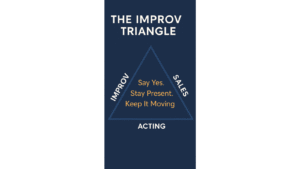
The Improv-Triangle-Cecil Archbold-Voice Actor and On-Camera Actor

“Always say yes” in improv translates beautifully to “stay open” in sales — and in acting. You listen actively. You adapt. You stay present. Because the moment you check out, the connection dies.

And improv isn’t just about being funny — it’s about being alive in the moment. It’s about reacting honestly and keeping the scene (or conversation) moving forward.

Whether I’m auditioning for a spot or recording a corporate narration, the mindset’s the same: Don’t freeze. Flow.

⚡ Improv teaches resilience — the ability to keep creating even when things don’t go as planned.

Learn how to “Yes…And” here The Second City Training Center – Chicago

Lessons Learned

Here’s what years of switching gears between acting and sales have taught me:

  • 👥 People buy from people they trust — and audiences believe actors who feel authentic.
  • 🧠 Emotional intelligence is a superpower in both professions.
  • 📝 Storytelling turns transactions into experiences.  — None of us like to be sold, but we all love to buy.
  • ⚡ Quick thinking creates memorable moments.  — Be bold, make a choice and commit to it.
  • 🌟 Authenticity always outperforms perfection. — Always be yourself.

Both industries are competitive, unpredictable, and occasionally exhausting — but the reward comes from connection. That moment when a car shopper says, “You really listened,” or when a director says, “That’s the take!” Same dopamine hit. Different stage.

Why This Connection Matters

For me, the overlap between acting and sales isn’t just philosophical — it’s practical. The confidence I gained from pitching cars helps me walk into auditions with poise. The empathy I honed in acting makes me a better communicator in business. Each discipline sharpened the other.

And honestly, I think that’s true for anyone switching careers or juggling multiple passions. Skills don’t exist in silos. They translate. They evolve. The trick is learning to see how.

If you’re someone straddling two seemingly different worlds — maybe corporate and creative — take heart. You’re not starting over. You’re cross-training.

So the next time you’re in a job that doesn’t feel connected to your dream, remember: every skill you learn might just be preparing you for your next act.

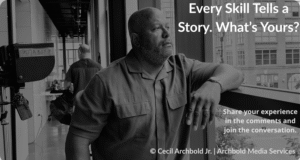
Closing Banner-Cecil Archbold-Every Skill Has a Story

Your Turn

I’d love to hear from you — have you ever had a job that secretly trained you for something totally different later in life? Drop your story in the comments below!

And if you enjoyed this post, consider following the Cecil Sez Blog for more stories at the intersection of acting, entrepreneurship, and creativity.
Here, I’ll keep exploring what it really takes to build a career fueled by passion, purpose, and maybe a touch of caffeine.

Filed Under: auto sales, On-Camera Acting, Transferable Skills, voiceover

Welcome Back To The Cecil Sez Blog

October 14, 2025 by Cecil Archbold

Why I’m Returning to the Cecil Sez Blog: Creativity, Career & Consistency

It’s been a while, hasn’t it? About a year, to be exact. If this blog were a houseplant, it would’ve wilted, dried out, and had a little “please water me” sticky note taped to it months ago. But here we are — dusting things off, cracking open the laptop, and putting words back into the world.

So why return now? That’s a great question. The short answer: creativity (because it keeps me sane), career (because this blog supports my voice acting, acting, and entrepreneurial journey), and consistency (because Google likes it when we show up regularly).

The long answer? Well, that’s why you’re here.

Rediscovering My Creative Voice

When I first started blogging, it was part of the “you’ve got to do this if you want people to find your website” playbook. You’ve got to start a voice acting blog!  Post regularly, be a consistent blogger, use keywords, sprinkle in links like parsley on pasta. All very practical. But somewhere along the way, it stopped being about expression and started feeling like homework.

So, I stepped away. And in that break, I realized something important: I actually missed it. Not the “ugh, I have to write a blog” feeling — but the part where I get to sit down and share what’s on my mind. Where I get to connect the dots between my worlds of acting, voiceover, sales, and entrepreneurship.

Because honestly, all those areas are messy, unpredictable, and kind of hilarious at times. And if I can share some of the lessons (and yes, some of the stumbles) with you, maybe you’ll take away something useful — or at the very least, have a laugh at my expense.  Go ahead and laugh now if you like…

👉 By the way, if you’re new here you can get to know more about me on my About Page.  And if you’re curious about what I do when I’m not typing out long blog posts, check out my Voice Acting Portfolio.

External reading break (a.k.a. homework you actually want to do): Content Whale’s guide to Why Content Consistency is Important for Your Blog


Key Goals for the Cecil Sez Blog’s New Chapter

So, what’s the plan now that I’m back? Simple, but intentional.

  • 🎯 Build authentic connections — share real stories, not just polished soundbites.
  • ✍️ Explore lessons I’ve learned (and am still learning) in acting, voice work, and sales.
  • 🌐 Boost SEO (because hey, the nerdy side of me wants this site to rank).
  • 🧠 Sharpen my storytelling voice — writing keeps my creativity muscles flexing.
  • 💼 Support my business growth — this blog isn’t just therapy; it’s also part of the bigger picture.  I’ll highlight the importance of creativity in entrepreneurship.

If you’ve followed my journey before, welcome back — I’ve missed you. If you’re new here, buckle up. We’re going places.


What’s Coming Next

Here’s the fun part: a sneak peek at what I’ve got cooking for the next few months.

  • 🎭 Acting meets sales — what selling cars taught me about being in front of the microphone and the camera.  And how storytelling in sales is the key to success.
  • 🎙 Voiceover lessons — the gear, the grind, and the “finding your voice” stuff that no one tells you.
  • 💼 Modern sales without sleaze because the world doesn’t need more pushy salespeople.
  • 🧘 Entrepreneurship & balance — trying to juggle business, family, and self-care without dropping too many balls.
  • 🤖 Industry trends — yes, even AI voice cloning and how it’s shaking up the VO world.

My goal is to post twice a month. Not too little, not too much — just enough to stay connected without driving either of us crazy.

👉 Pro tip: Bookmark The Cecil Sez Blog now so you don’t miss the ride. Or better yet, hit the follow button if you’re reading through RSS or subscribe to my mailing list once I get that polished up.


External resource for the blog nerds in the room: MailChimp’s Tips & Tricks on Planning Your Monthly Content Calendar

Closing Thoughts (and a Small Ask)

I’m excited to be back at this. Writing gives me a place to reflect, share, and — hopefully — connect with you in ways that go deep.

But here’s where you come in.

👉 Drop a comment below and tell me: what’s one area of creativity, career, or consistency you’re working on right now?
👉 Follow this blog (seriously, go ahead and subscribe) so you can stay in the loop as new posts go live.

Thanks for being here. Let’s see where this new chapter takes us.

Filed Under: auto sales, blogging, entrepreneurship, voiceover Tagged With: entrepreneurship

WHAT TO DO WHEN LIFE REDIRECTS YOU?

September 27, 2024 by Cecil Archbold

RECALCULATION…RECALCULATION…RECALCULATION

Have you ever used the GPS feature in your vehicle to find a destination?   Probably yes. Imagine that you’re meeting some friends at a restaurant that requires reservations.  Reservations that took you weeks to get.  You’re excited as you jump into your vehicle and enter the destination address in your GPS app.  In your app you may have options like, quickest route, route to avoid tolls, route to avoid traffic congestion or maybe even a scenic route option.  So, you hit the road; confident that you’ll arrive at your destination in the time stated on the GPS’s display.  As you drive, you approach a turn that you’re supposed to take.  You hear (for proper effect, read this next line in a robotic voice): “In a ¼ mile turn right on the next street.”  (Don’t you wish they would use real human voices for those?)  As you get closer to the street you see a large barricade with a sign attached to it that reads: ROAD CLOSED-DO NOT ENTER.  And of course, there’s no sign present with directions for an alternate route.  Uh oh!  What do you do now?  You’re not sure how to get to your destination, and now your only means of navigation failed to account for the road closure.  So, you experience a bit of panic, but that panic promptly dissipates because your GPS sounds off with: RECALCULATING.  You’re now at ease because the good ol’ reliable GPS will take care of you.  Unfortunately, though, that feeling doesn’t last long.  Because the RECALCULATING isn’t really helping, because each recalculation leads you to another closed road, or one way street, or dead-end street.  You’re now starting to panic again!  You decide that you’ll take matters into your own hands.  You attempt to utilize your own navigation skills to get you to your destination.  You sadly proceed with limited confidence knowing that you’ll likely arrive to dinner late…maybe in time for dessert!

Dealing with recalculations for road closures and being late to dinner, ehh…that might be an easy one to deal with.  I however recently had a significant recalculation that detoured my plans.  A detour that will likely last for the next 6-12 months.  …more on that later.

Your life does not get better by chance.  It gets better by change.  –Jim Rohn

Life is all about change.  That’s a concept I feel that most of us can embrace.   The challenge is how do we keep moving through the change.  Our response to change is sometimes to keep moving and ignore it.  Acting as if nothing’s changed.  At other times we simply stop moving or give up because we simply don’t know what to do in response to the change.  Neither of those by itself is a proper response.  What’s needed is a well thought out methodical and planned approach.  One that reflects on past circumstances, bears in mind recent changes and simultaneously considers future objectives.  Here are five recommendations that you can use to handle some of life’s detours.

5 Ways to Handle Life’s Detours

1. Build a Strong Support System

When a GPS recalculates, it doesn’t work alone—it relies on satellites, data, and many different connections. Similarly, when life throws unexpected changes your way, surrounding yourself with a support network is crucial. Family, friends, mentors, and professionals (like physical therapists for an injured athlete) provide emotional support, guidance, and practical advice.

Imagine an injured athlete leaning on their coach, teammates, family, and a therapist to not only rebuild physical strength but also to maintain a positive mindset. Having this community around helps them see that while they can’t compete on the field right now, they’re not on this journey alone.

Understandably, not everyone has access to a strong support system.  If you do find yourself without assistance, please don’t give up.  There are plenty of resources available to assist people in a variety of areas.  Find them, reach out to them and ask for help.  And most importantly…don’t give up.

2. Have Faith In God and In the Process

Much like how we trust the GPS to get us back on track, having faith in God helps provide peace and perspective. Faith can anchor you during challenging times.  God can use your change in circumstance to develop you into something greater than you were before the change.  Even though the outcome may not be immediately clear…keep the faith.

Some athletes may feel lost without the ability to be on the field in competition, but faith reassures them that this detour might lead to unexpected opportunities to perhaps develop new skills in different areas.  Skills that may allow them to still be involved in the sport they love…things like coaching or mentoring.


3. Seek to Understand the WHY Behind the Change

Understanding the why behind the change leads to acceptance of the change.  When the GPS recalculates, it’s sometimes because it has detected something you didn’t see—a traffic jam, an accident, or a closed road. Understanding the why can help minimize the tendency to resist the change, which is especially important if the nature of the change is beyond our control.  This is also a time to consider being proactive for the future.  Taking time now to reflect and prepare for future change will give you a leg up the next time a similar change event occurs.

In the sports world an athlete might come to understand that the injury is a signal to slow down, refocus, or prioritize long-term health. This insight can shift their mindset from frustration to personal growth.


4. Effectively Use Your Time During the Transition

Most of the time a GPS recalculation means you may have to take a longer route.  But a longer route doesn’t necessarily mean a waste of time.  It’s just a different way to get where you’re going.  A positive approach is to look at this new route as a chance to experience a different neighborhood of your city.  Or perhaps expand your personal or professional network.  Whatever characterizes your change situation; there are likely numerous opportunities for you to learn something valuable that you can take with you once the change has passed.  You just must keep your eyes open for the opportunities.
Athletes in the recovery process could focus on activities that they may not have had time for while they were actively participating in their sport.  This may include deepening their understanding of their sport by watching more film, reading about those who have had success overcoming similar challenges or listening to motivational speakers.

5. Stay Open to New Opportunities

Let’s be honest, none of us really love the unfamiliar.  When the GPS suggests a new route, it might take you down some roads you’ve never seen before.  But if you’re open to it you may be led to some unexpected and beautiful discoveries. Similarly, staying open to new possibilities during a life transition can lead to personal or professional growth that you may not have experienced outside of your recent change.

You’ve probably seen many athletes retire.  Some because of injury and some just because their time had come.  Some of them have found new a new love in broadcasting, acting, coaching, training, teaching business skills to high school students or perhaps a non-sports related venture in the business world.   They didn’t just wallow in self-pity about the end of their career.  They made a conscious decision to move on!

I mentioned earlier of my personal detour.  As I write this, it’s been a little over a week since my world was recalculated.

On a recent warm weekend morning, I was full of excitement as I headed to a local park to play softball. My 22yr old son and some of his friends played on the team I was about to join.  It was a great feeling because I was anxious to show my son that I still had some ability to play.  Now don’t get me wrong…I’m 56 about to play a game with some dudes in their 20’s, so I had no illusions about outshining anyone.  I just wanted to show them, my son and myself that I could still hold my own (hit the ball, catch the ball and run).  I felt great.  I’ve been working out in the gym regularly, lifting weights, running, stretching…ya know the usual stuff!  I had some minor aches and pains here and there, but I was virtually injury free.  A far as I could see there wasn’t anything holding me back from performing at a respectable level for a 56-yr old guy.

My first at-bat was very underwhelming.  The 2nd at-bat resulted in a single, from which I eventually scored.  My 3rd at-bat is when things went sideways.

I hit a little dribbler to the shortstop, which I figured he’d easily grab and throw me out at 1st.  I then broke the cardinal rule: ALWAYS HUSTLE, and I casually began jogging to 1st base.  However, the shortstop bobbled the ball, which gave me the idea that I could arrive safely at 1st.  So, I immediately turned on the jets and with a head of steam ran toward 1st base.  A few steps later I heard a loud pop!  My leg gave out and I hit the ground hard, just a few feet from the base.  I’ll spare you the sounds and words that came out of my mouth…just use your imagination.  The next thing I knew I was being carried to the car by my son and one of his buddies.  My wife speedily drove to the Emergency Room while I grimaced in pain the whole way.  After being examined it was determined that my patellar tendon had ruptured.  That’s the tendon that attaches your patella/kneecap to your tibia.  You can say ouch now!

So, that was my RECALCULATION.  What I thought was going to be a fun day on the softball field turned out to be the start of a 6-12 month journey of rehabilitation.  As I write this my surgery was just yesterday.  As unexpected and painful as this was, I have to say that it wasn’t all that bad.

My support system headed by my Lovely wife has been instrumental.  She immediately jumped into care-giver mode; making sure that I was taken care of from the moment we arrived at the ER, to the doctor’s office visits to caring for me at home.  She has truly made this experience more bearable.

As I move through this process, I’m reminded of the numerous life trials that I’ve been through and how God showed up right on time during each one of those trials.  He did it then and He will do it again.  I don’t know exactly how this rehabilitation will play out, but I don’t have to.  God has got me in His hands.

Of course, I’m wondering why this injury happened and what I could have done to prevent it.  Good stuff to know but I’m not gonna allow myself to get bogged down by that.  My goal is to learn how to best take care of myself to minimize the possibility of future injury.  That, I feel will be an effective use of my time.  Also, while my motion is limited, I’m planning to get to some projects that have been on the back burner for quite some time…like my Blog, Podcast, catching up on some reading and organizing computer files.

Instead of doing all you can to avoid and reject life’s recalculations and detours, seek to embrace, learn from and grow because of them.  Keep a long-term view and enjoy the fruits that come as a result.


Filed Under: life change, life transition, personal development, positive thinking Tagged With: attitude, personal development, sports injury

START SHARING YOUR STORY…TODAY

December 8, 2023 by Cecil Archbold

Your Story Has Value!

Ok, children gather around, it’s story time!  Do you remember hearing those words from your kindergarten teacher?  Do you remember the feeling of anticipation about what was to happen?  The building excitement as you and your classmates sat down, crossed your legs, and had a laser focus as your teacher showed you the book cover and then opened it to start reading.  This wasn’t play-time, this was STORY TIME!  Your ears were tuned into just the sound of your teacher’s voice.  You knew something BIG was about to happen.

Why was that?  What was it about story time that instantly subdued the rambunctiousness of 5yr olds?  I believe the thing that commands the attention of children is something that some of us as adults have lost touch with…imagination.  Humans of the kindergarten age have wild and vivid imaginations.  To them, nothing is impossible.  Nothing is unachievable.  They don’t know or understand what limitations are.  If they can dream it, it can exist.

The stories that are told to our precious little ones are very imaginative and full of illustrations.  The combination of character driven voice acting by teachers and the book’s pictures serve as keys to open up a door of endless possibilities in the minds of our kiddos.  They hang on to every word and feel as if they are connected emotionally to the characters in the story.  It’s a very powerful thing.  Most often the stories told to the little ones are lessons about character traits that we as adults want to instill in our children.  Things like being kind to others, saying please and thank you, having fun as a kid, sharing your toys, being respectful and safety crossing the street to name a few.  Presenting these important subjects in a way that meets kids where they are is key to getting cooperation and buy-in from these very young minds.  Due to their age, it certainly wouldn’t work to give them a thick textbook and have them sit for an hour or two and listen to a lecture.  That’s for us grown folks, right?  Well, maybe not.  Perhaps some of us grownups would respond well to a good old-fashioned story-time!  I don’t know about sitting cross-legged on the floor though, because some of us may not be able to get back up!  But what might be a good idea is for those of us with stories in our heads to take time to share those stories for the benefit of everyone.

But how do we do that?  How about writing a book?  You could write your autobiography starting with your early days when you were knee-high to a grasshopper and share all the details of your life’s journey and all the lessons you’ve learned.  You could write a blog and call it My Life’s Story and put it out weekly to share your ups and downs.  You could do a podcast where you have guest speakers who support the conversation you’d like to have.  Or maybe a live chat where you take questions and comments from the public.  It’s clear that today there are countless ways to share your story.  But that’s the method.  Where’s the why?  Why should you share your story?  Why should you open yourself to the world? What’s the big deal about you?  Who would care about learning about you?    Please read on…You may be surprised to learn about the power your story has.

 3 Important Reasons You Should Share Your Story

 1.There’s Power in Vulnerability

What?  You’re saying that I actually gain power by lowering my guard and opening up myself to the world?  No way!  Well…YES way.  Being vulnerable does indeed feed power to the person being vulnerable.  Here’s why.  There’s a lot of effort involved in protecting oneself; a tremendous amount of vigilance is required.  To be effective, the focus can’t lie anywhere else other than on looking out for potential invaders to the fort.  So, in a way, a focus on protecting oneself is kind of a show of strength.  But that approach limits the potential reach that an individual could have and the potential impact that individual could have on the lives of others.  The release of the protection mode doesn’t really create power but transfers it.  The brain space that previously focused on holding it in can now focus on other creative endeavors, like relating and bonding to others.  We’re now free to connect on a deeper level with those around us when we’re not worried about hiding behind self-built walls.  We become less super-human and more…just human.  And that deeper connection with others is truly where the real power lies.

 2.Promote self-healing in you and others

If you’ve been living on this earth for longer than a few minutes you likely have experienced some ups and downs in your life.  Maybe some extreme downturns or downright tragedies.  If you’re an entrepreneur, you’ll probably find it easy to share your story with a group of wannabes wanting to start their own businesses.  Or if you’re a multi-millionaire, financial expert, you’ll likely have no trouble sharing the steps you took to reach your level of success.  But if you’re someone who has experienced significant downturns or downright tragedies, you may think that no one is interested in hearing your story.  On the contrary, people are craving stories just like yours.  And sharing your story with others can serve to help you.

Most of us know that sometimes, bottled up emotions have a way of escaping that isn’t necessarily healthy for us or those around us.  Instead of sealing up perhaps a better way would be to deal with those emotions effectively by releasing them.  Some choose to do this through visits to a professional therapist.  Some write books, go on speaking engagements, or utilize one of the many technology tools available today.  Regardless of how it’s done, the actual sharing of your story has a way of validating your existence beyond just identifying you with what you’ve been through.  It sets you apart and above those past circumstances and is somewhat therapeutic.  There’s something about you putting your story into words and saying them out loud that gives you the ability to repair and rebuild yourself.  Additionally, the people who hear you will identify with your story, even if they haven’t had the same experiences.  They can take tidbits of your life and apply it to their unique situations.  You’ll then build trust and support with groups which will serve to lift you up!


3.To Inspire-Awaken-Encourage

Have you ever had what you thought was a great idea?  Something that you were extremely excited about?  Something you were on fire for?  Well if you went full steam ahead right away…Good For You!  But maybe you didn’t proceed with action.  Maybe you let your excitement die down and it went on the “back burner”.  Your idea didn’t disappear, but just kinda went to sleep.  Then, jump forward sometime in the future and you hear a speech, see a movie, read a book or come across an article that awakens your idea.  Now the fire in your belly is back!  Interesting huh?  Isn’t it great that merely hearing someone else’s story gave light to your vision?  You have the power to do that for some else right now.  You don’t have to be rich and famous.  You don’t need to have super-human powers.  You just need to share.  Share what you’ve been through and where you’re going.  Share your story.

Think of how amazing it would be for you to be the spark that ignites someone else’s fire.  Talk about paying it forward…wow!  And before you think you’ve got to have an audience of thousands to be effective, you merely have to start.  Start writing a blog.  Start recording videos.  Start speaking with family and friends.  Just start.


Filed Under: personal development Tagged With: inspiration, inspiring stories, motivation, pay it forward, paying it forward, storytelling

eLearning Developer & Voice Actor: 5 Communication Tips for a Successful Relationship

August 20, 2022 by Cecil Archbold

You’ve poured hours of hard work into developing your eLearning content.  You already understand the value of using a professional voice to deliver your eLearning content.  You’ve chosen the voice actor.  Now what?  Should you just send the voice actor a script and expect that everything will work out to your liking?  Yes… if you’re feeling lucky.  But instead of leaving things to chance, you may want to take an active stance NOW to put yourself in the best possible position for success

I’m sure we’d all agree that clear communication is a vital part of the foundation upon which a successful eLearning project is built.  But how do we go about the business of communicating with the Voice of our eLearning project?  How should we manage the overall communication process?  What should we talk about before, during and after project completion?

Here are 5 tips you can use to guide your communications with your voiceover talent.

1.Communicate the goals of your eLearning project.

Be open with your vision about what you hope to see at the project’s completion.  Give your voice actor a glimpse of the place this eLearning has in your organization.  Be sure to share your desired outcome.  Part of every voice actor’s training is Script Interpretation.  This is when an actor is educated on the importance of grasping the “big picture” and not just focusing on the words to be read.  Understanding that big picture will put the actor in the proper frame of mind to deliver the lines with the tone, pace and emotion that the writer intended.  That intention of the writer could be to generate awareness, sell a product or service or to educate.  When you share your vision for your project you invite the voice of your project to see what you see.  You allow your project to be more than just words on a page or screen.  This helps the voice of your project call on his training and tailor it to exactly what you need.

2.Establish rules of engagement.

How will project details be communicated?  E-mail is one way, but sometimes the back and forth of e-mail communication can be tiresome and time consuming.  There are also web based project management tools like www.basecamp.com or www.dapulse.com.  As effective as electronic communication is, there are times when a simple phone call will do the trick.  So don’t be averse to picking up the phone and having a live conversation with your voice actor.

3.Define Roles Responsibilities / Set clear expectations

The role of the voice of your project is to deliver your content in the way you desire.  The voice actor is the expert who will bring life to the words you have written.  One of the benefits of using a professional voiceover is that you can rest assured that your eLearning project is their PRIORITY.  It is their job.  That being said, you should still be sure to leave no doubt as to what you expect from the interaction with the voice of your project.

  • Delivery date.
    • Probably one of the most important considerations. Make this known early.  If the project is lengthy and there are milestones involved be sure to set up a delivery schedule that can be used to track performance.
  • Script revisions.
    • Establish a system to handle script changes that come after the recording has been submitted. Determine how and when you’ll make the voice actor aware of these modifications; whether e-mail or phone calls, individually or in batches.
  • Recording specifications.
    • This area covers file types (mp3, wav, aiff…), sample rate, bit depth, and file naming convention. The recording software used by your voice actor has many settings that you may not need.  If you don’t specify, it’s likely that your voice actor will use his judgement and choose settings based on past experience.  If you know that your eLearning software requires a particular setting please be sure to communicate this as early as possible.
  • File delivery.
    • Depending on the length of the recordings, e-mail may not be an option. Fortunately there are a number of alternatives for electronically transmitting large files.  For example: ftp transfer, dropbox.com, www.wetransfer.com and others.

4.Contractual Agreement

Does your organization regularly work with freelance talent?  If yes, you may already have a standard freelancer agreement in place.  This agreement will typically cover things like the freelancer’s position as an independent contractor, intellectual property rights, the handling of the company’s confidential information and pricing; just to name a few.  With regard to voiceover services the following items should be clearly spelled out:

    • Recording Studio: Where is the actual recording taking place? Voice actor’s personal studio or a rented studio?  Who will be responsible for additional charges if there are any?
    • Recording Session Direction: If it’s your desire to listen in live while the recording takes place be sure to state this up front.
    • Revisions, Corrections & Retakes: How will changes affect the price previously quoted?
    • Editing, File Separation & Labeling: To make it easy for you to drop recordings into your eLearning content; it will likely be necessary to label files according to your parameters. Be sure to make the file naming convention clear.

5.Post project review

This final tip represents a great growth opportunity.  At the conclusion of every eLearning project you’ll have things that worked well and things that could have worked a bit better.  Hopefully you would have avoided disasters!  Taking the time to examine all aspects of your project will provide you with learnings that you can apply to future projects and interactions with your voice actor.   Why is this important?  Well, repeating mistakes can waste time and money.  Even if things went extremely well it would be a good idea to document that so that it can be preserved and shared with others in your organization who may be involved in future eLearning-voiceover projects.

Don’t guess when it comes to dealing with your voiceover talent!  Be proactive and engage in communication that will build a strong foundation for a mutually-beneficial working relationship.

Filed Under: elearning Tagged With: eLearning, narrator, voiceover, voiceover talent

  • Page 1
  • Page 2
  • Go to Next Page »

Primary Sidebar

Categories

  • auto sales
  • blogging
  • elearning
  • entrepreneurship
  • life change
  • life transition
  • On-Camera Acting
  • personal development
  • positive thinking
  • Transferable Skills
  • Uncategorized
  • voiceover

Archives

  • December 2025
  • November 2025
  • October 2025
  • September 2024
  • December 2023
  • August 2022
  • June 2022

CONTACT CECIL

This field is for validation purposes and should be left unchanged.

Connecting with Cecil is easy. Just fill out the information below and he’ll get back to you ASAP. Usually within 24 hours.

cecil@archboldmediaservices.com
708.794.8444

©2025 Cecil Archbold Media Services // Voice Over Site by Voice Actor Websites

MENU
  • Home
  • On Camera
  • Voiceover
  • Cecil Sez Blog
  • Podcast
  • Contact