

CECIL ARCHBOLD

  • Home
  • On Camera
  • Voiceover
  • Cecil Sez Blog
  • Podcast
  • Contact
cecil@archboldmediaservices.com
708.794.8444
Archbold Media Services On-camera Actor, Voice Actor, Blogger, Podcaster Branding Logo

ARCHBOLD MEDIA SERVICES

Voice Acting/Industry Insight

What AI Can’t Replicate About a Great Voice Performance (Yet)

August 26, 2026 by Cecil Archbold

Cecil Archbold recording a voiceover session in his home studio booth

A prospective client recently asked me if my performance could compete with an AI-generated read.

That’s not a hypothetical anymore. That’s a Tuesday. Voice seekers are continually weighing options of using human vs. AI-generated voices.

I didn’t get defensive about it, and I’m not going to get defensive here either. I’ve spent the last couple of years going deeper into AI than most voice actors bother to — prompt engineering, tools, workflows, the whole thing. I’ve run my own scripts through generative voice tools and listened back against my own reads, side by side, on the same copy. So when I tell you what I think AI voice tech can’t do yet, I’m not speaking from fear of it. I’m speaking from having actually used it, tested it, and heard exactly where it holds up and where it doesn’t.

This post is about where that line really sits. Not the scary version. The honest one — the kind of straight answer I try to give on every project that comes through Archbold Media Services.

Voice actor listening to AI-generated voice samples on a laptop in his studio

I’m Not Here to Trash AI — I’ve Been in the Room With It

Here’s something most of the “AI is coming for voice actors” posts won’t tell you: the person writing them usually hasn’t spent real time with the tools.

I have. I completed a prompt engineering specialization through Vanderbilt, and I’ve spent time building small AI-powered tools and systems for my own business — not as a hobby, but because I think understanding this stuff from the inside is part of staying relevant. Sales taught me how to read a room. On-camera acting taught me how to read a moment. AI is teaching me how to read a system.

That matters here, because it means I’m not writing this from a place of “protect the old way of doing things.” I’m writing it from a place of “I’ve seen what the new way of doing things is actually good at, and where it still runs out of road.” It’s the same instinct that shaped what I learned moving from a sales career into booking voiceover work — understand the thing fully before you decide what it’s actually worth.

You can’t credibly defend the value of human performance if you’ve never taken the tools seriously enough to test them.

Split image comparing an AI voice interface to a human voice actor recording

What Generative AI Voice Tech Actually Does Well

Let’s give credit where it’s due, because pretending AI voice technology is bad just isn’t accurate anymore — it’s come a long way, and dismissing it outright ignores that.

Generative AI is genuinely strong at:

  • A rough draft narration in minutes, not days.
  • The same tone, pace, and pronunciation across hundreds of lines without fatigue.
  • Budget flexibility. For high-volume, low-stakes content — internal training modules, placeholder scratch tracks, rapid prototyping — it’s often the smarter business decision.
  • Scripts change late? An AI voice actor doesn’t need to be re-booked.

If you’re a production company or an eLearning team weighing options, none of that should be dismissed. There are real use cases where AI voice technology is the right tool for the job.

But “the right tool for some jobs” and “a replacement for the craft” are two very different claims. That’s where I want to spend the rest of this post.

Cecil Archbold marking up a voiceover script with handwritten performance notesImage Title: Cecil Archbold Reviewing Voiceover Script Notes Caption: Every read starts with interpretation — long before the mic turns on. Description Field (SEO): Cecil Archbold preparing a voiceover script with handwritten performance notes, the interpretive work behind every professional read. See more at https://cecilarchboldvo.com/. Image 5 — Split-Screen: eLearning Interface vs. Human Narration (new) Filename: elearning-narration-human-voice-vs-interface.jpg Alt Text: Split image of an eLearning course interface next to a voice actor recording narration Image Title: Human Narration for eLearning Course Development (no name — conceptual) Caption: (none — image reinforces the eLearning section copy directly above/below it) Description Field (SEO): A visual contrast between a busy eLearning course interface and the human narration process behind training content that actually holds a learner's attention. Learn more at https://www.archboldmediaservices.com/. Image 6 — Closing Portrait Filename: cecil-archbold-voice-actor-portrait-relaxed.jpg Alt Text: Cecil Archbold smiling after a voiceover recording session Image Title: Cecil Archbold Voice Actor Portrait Caption: No defensiveness needed — just twenty years of knowing what a great read actually takes. Description Field (SEO): Cecil Archbold, voice actor and on-camera talent based in Chicago, reflecting on where human performance still leads. Naming convention check: Cecil's name appears on Images 1, 4, and 6 — three total, right at the max. Images 2, 3, and 5 stay clean and keyword-focused. URL check: archboldmediaservices.com appears on Images 1 and 5 (2 uses — within limit). cecilarchboldvo.com appears once on Image 4. Both spread out, neither stacked, both within the 1–2 use guideline. This post is now locked at 6 images with full metadata. Let me know if you want this compiled into the archive doc format now, or held until publish.
Every read starts with interpretation — long before the mic turns on.

Where the Line Actually Sits — Intention, Relationship, and Listening

Here’s what I’ve noticed, both from testing AI tools myself and from twenty-plus years of reading rooms in sales and on set: the gap isn’t really about sound. AI voice technology can sound remarkably human now. The gap is about judgment — and judgment is what actually determines whether a performance lands with an audience or just washes over them. Three things make up that judgment: intention, relationship, and listening.

Intention

A great voice performance isn’t just accurate delivery — it’s a series of tiny decisions about why a line is being said. Is this line reassuring the listener or challenging them? Is the pause before the word a beat of hesitation or a beat of confidence? That’s not pattern-matching. That’s a human being making a choice based on understanding the moment the way another human will experience it. It matters because those tiny choices are exactly what separates a read that sounds fine from one that actually persuades, reassures, or sells. That’s the whole job for an advertising agency or production company — a campaign doesn’t succeed because it sounded pleasant, it succeeds because it moved someone toward trust, action, or belief. Intention is what carries a voice from pleasant to persuasive.

Relationship

When I’m in a session, I’m not just reading copy — I’m building a relationship with the material, the brand, and often the director, in real time. A note like “give me more warmth, less salesy” isn’t a technical instruction. It’s a relational one. I have to understand what “salesy” means to this client, in this context, and adjust — not from a menu of preset tones, but from genuine interpretation. It matters because brand voice isn’t static — it shifts project to project, and someone has to be able to track that shift in real time. For an agency or production company, that relationship is what turns a one-off read into a working partnership — someone who understands the brand well enough that the notes get shorter and the results get better with every project, instead of starting from zero each time.

Listening

This is the one people underestimate most. Great voice work requires listening — to direction, to the emotional register of a scene, to what’s not being said in the script but needs to come through anyway. That skill is earned, not generated. It matters because the best direction is often the least literal. A director doesn’t hand you a setting — they hand you a feeling to chase: “Sound commanding, but not quite as commanding as a drill sergeant.” “Sound compassionate, but not sappy.” Those notes only make sense to someone who knows what a drill sergeant sounds like, what sappy sounds like, and exactly where the space between the two actually lives. That’s not a slider you can move. It’s a judgment call, made in real time, by someone who’s spent a career learning how to hear what’s actually being asked for.

AI can generate a voice. It can’t yet generate the judgment behind a great one.

Split image of an eLearning course interface next to a voice actor recording narration

What This Actually Means for Production Companies, Agencies, and eLearning Teams

This isn’t just a philosophical debate — it has real, practical implications depending on who you are and what you’re producing.

For production companies: The jobs where AI voice makes sense are usually the ones where nobody’s watching closely — internal placeholders, quick scratch tracks, low-stakes drafts. The jobs where a human voice actor earns their rate are the ones where the performance is the product: commercials, branded content, anything where audience trust and emotional accuracy directly affect the outcome. Knowing which bucket your project falls into before you cast (or don’t cast) saves you time and protects the final product — and it starts with specs that clearly communicate what the project actually needs, whether that’s an AI-appropriate placeholder or a performance that has to carry real weight.

For advertising agencies: Brand voice is relationship, not just tone. An AI read can match a style guide. It can’t build the kind of long-term vocal identity that makes an audience recognize and trust a brand over years of campaigns — the way a consistent human voice actor can become genuinely associated with a brand’s personality.

For eLearning developers: This is where I think the conversation is most nuanced. AI narration is tempting for high-volume course libraries, and honestly, it’s a reasonable call for some modules. But retention data consistently shows learners disengage faster from voices that feel flat or synthetic  — and the modules where real understanding needs to land (compliance training with legal stakes, onboarding that shapes culture, anything emotionally sensitive) are exactly where a human voice’s judgment and warmth measurably improve outcomes.

The question isn’t “AI or human” — it’s “what’s actually riding on this performance?” Answer that first, and the casting decision gets a lot easier.

The Long Game — Where I See This Going

I don’t think the honest answer is “AI will never get here.” I think the honest answer is “not yet, and here’s why that gap matters right now.”

Sales taught me how people think. On-camera acting taught me how people feel. Voiceover taught me how people listen. Technology is teaching me how people learn — including how they learn to trust a voice, and how quickly they can tell when something’s missing, even if they can’t name what it is.

That’s the piece I don’t think generative AI closes anytime soon. Not the sound. The trust.  The kind of trust that makes a client say “we’ve got this handled, we’re good”.

I’m not interested in pretending AI voice technology doesn’t exist, or hoping it goes away. I’m interested in understanding it well enough to know exactly where a real performance still wins — and making sure that’s where I show up.

So the next time someone asks whether a human voice can still compete with an AI-generated one, my answer isn’t going to be a defensive “of course.” It’s going to be the more useful one: it depends what you actually need that voice to do. If it just needs to say the words, AI has that covered. If it needs to be believed, that’s still a job for someone who’s spent a career learning how people listen.

Cecil Archbold smiling after a voiceover recording session
No defensiveness needed — just twenty years of knowing what a great read actually takes.

I’d love to hear where you land on this — drop a comment and let me know whether you’ve tested AI voice tools yourself, and what you noticed. If posts like this are useful to you, follow the blog for more of these breakdowns as the industry keeps shifting. And if you’ve got a project on the table where the performance itself is the thing that needs to land — not just the words — that’s exactly the kind of work I love doing.

Filed Under: AI & Industry Trends, Voice Acting/Industry Insight

What 20+ Years in Sales Taught Me About Booking Voiceover Work

June 23, 2026 by Cecil Archbold

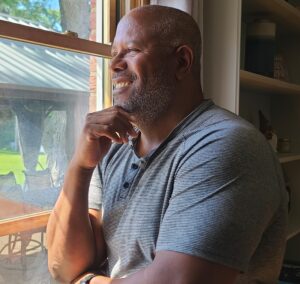
Cecil Archbold voice actor standing at a window with natural light with a confident, relaxed expression

I used to think sales and voiceover were two completely different careers.

One was loud, competitive, quota-driven — a world of handshakes, follow-up calls, and “Is that the best price you can do?” and “Your competitor is doing it for less” and “Let me talk to my wife and get back to you.” The other was quiet, creative, performance-driven — a world of microphones and scripts and emotional authenticity.

Then one day I was sitting in my booth, prepping for an audition, and I caught myself thinking about a client I hadn’t heard from in a while. And I thought: I know exactly how to handle this. Not because I read a voiceover business book. Because I spent over 20 years doing exactly this in two completely different industries.

Ten years selling cars. Ten+ years selling labels and plastic films to commercial printing companies. Two different worlds. Two very different types of clients. And a master class in what actually moves people from “maybe” to “yes.”

Here’s what I brought with me when I walked into the voiceover world — and why I think it makes me a different kind of collaborator than most talent you’ll work with.

Professional consultative sales environment in semi-busy auto showroom with people engaged in conversation

The Lesson the Car Lot Taught Me (That Most Voice Actors Never Learn)

My decade of selling cars taught me this — the person walking through the door almost never tells you what they actually need. And if you’re paying attention on a car lot, you figure that out fast.

They’ll say, “I’m just looking.” What they mean is: I don’t trust you yet.

They’ll say, “I want something practical.” What they mean is: I just went through a divorce and I’m rebuilding, and I need to feel like I made a smart decision.

They’ll say, “Just give me your best price.” What they mean is: I’ve been burned before and I don’t want to feel stupid.

Sales — real sales, consultative selling — is about hearing the thing underneath the thing. It’s about asking better questions than the ones you’re tempted to ask, listening longer than feels comfortable, and figuring out what someone actually needs so you can actually help them.

Here’s the voiceover parallel: clients don’t always know how to ask for what they need either.

Sometimes a creative director says “conversational” when what they mean is “warm but authoritative.” Sometimes a producer says “energetic” when what they mean is “punchy but not salesy.” Sometimes a client says “just do what you think is right” when what they mean is “I trust you enough to let you lead, but I’m quietly hoping you nail it.”

Quotable takeaway: Booking voiceover work isn’t about sounding like what the client asked for. It’s about understanding what they actually need — and delivering that.

The sales floor taught me to listen past the surface. That skill transferred directly. If you want to go deeper on what clients are really looking for, I wrote about that directly in What Clients Actually Want From a Voice Actor (But Rarely Say Out Loud).


Two professionals in a relaxed meeting, building trust over time

Ten Years of B2B Sales and the Art of the Long Game

If the car lot taught me to listen, a decade in the commercial printing industry taught me something harder: patience.

B2B sales cycles are long. You might make 15 touches with a prospect before they even take your call seriously. You might pitch a company for two years before they give you a shot at their business. And if you go into that process treating every follow-up like a desperate bid for attention, you will lose every single time.

The secret I figured out — and this took me longer than I care to admit — is that follow-up done right isn’t annoying. It’s a service.

When I’d check back in with a buyer and say, “Hey, I saw that there’s been some recent consolidation in paper suppliers — I thought you might want to talk through how that affects your label paper printing,” I wasn’t pitching. I was being useful. I was showing them I understood their world. And that, over time, is what turns a vendor into a trusted partner.

Now I’m in voiceover, and I watch a lot of talent treat their follow-up like an apology. “Sorry to bother you again, just wanted to check in…” That’s not follow-up. That’s self-erasure.

I check in differently. I make it about them. I reference something specific. I keep it short. I give them a reason to respond that isn’t just “please hire me.”

Quotable takeaway: Consistent, value-driven follow-up isn’t a nuisance — it’s a differentiator. The talent who shows up with something useful gets remembered.

Production companies and agencies are busy. If you can remind them you exist while also making their life slightly easier, you’re not a pest. You’re a pro.


What Consultative Selling Actually Looks Like in the Booth

Cecil Archbold in a professional voice recording studio, focused and confident at the microphone

“Consultative selling” gets thrown around a lot in sales training. It sounds polished. What it actually means, in practice, is pretty simple: you stop trying to sell and start trying to solve.

In the printing industry, I wasn’t just selling blank sheets of labels and plastics. I was solving a problem — a packaging problem, a logistics problem, a brand consistency problem. My job wasn’t to push a product. It was to understand the client’s operation well enough that my solution made obvious sense.

I bring that exact mindset to voiceover.

When I get a project, I’m not just thinking about my performance. I’m thinking about the client’s deadline, their approval chain, their brand voice standards, their audience. I’m thinking about what happens after I deliver the files — who has to approve them, who might push back, what could go sideways.

And that shapes how I work.

What That Looks Like in Practice

  • I ask clarifying questions before I start. Not because I don’t know what I’m doing, but because understanding the context makes my performance better and saves everyone time.
  • I deliver options when the direction is open. If the specs give me creative latitude, I’ll often deliver two reads — a primary and an alternate — so the producer has something to work with rather than having to go back for a pickup.
  • I flag potential issues early. If I think a pronunciation is ambiguous, or if the phrasing in a script feels off for the intended audience, I’ll say so before I record — not after.
  • I meet deadlines without drama. This shouldn’t be a differentiator, but apparently it is. Sales taught me that being reliable is a competitive advantage. I don’t miss turnarounds.

Quotable takeaway: The voice actor who thinks like a collaborator — not just a performer — is the one who gets called back.

That consultative instinct isn’t taught in acting class. It comes from years of figuring out how to make someone else’s job easier, faster, and less stressful. Archbold Media Services was built on that philosophy from day one.


The Sales Skill That Transfers Directly to Voiceover (Most People Overlook This One)

Abstract conceptual image representing the power of silence and restraint in performance

There’s a specific skill that separates good salespeople from forgettable ones. It’s not closing. It’s not prospecting. It’s not even relationship-building, exactly.

It’s this: knowing when to shut up.

In sales, the instinct when you’re nervous is to fill silence. Keep talking. Keep pitching. Keep trying to convince. And every experienced sales trainer will tell you the same thing: that’s the worst thing you can do. You make a strong case, you ask a good question — and then you let the silence do the work.

The ability to hold space, to trust that you’ve said what needed to be said, to not oversell — that’s a sales skill. And it is also, directly and completely, a performance skill.

Voice acting rewards restraint. The performers who try to do too much — who push every line, who color every word, who can’t let a beat breathe — they don’t book the work. The ones who can say a lot with a little, who understand that silence is part of the performance, who trust the material — those are the voices that keep getting called.

I didn’t learn that in the booth. I learned it across a desk from a buyer who was deciding whether to trust me.

Knowing when to stop talking — in a sales meeting, in a negotiation, in a recording session — is a discipline. And I genuinely believe that decades of consultative sales work made me a better voice actor than I would have been if I’d come to this work straight from performance training alone.


Why Any of This Matters to You (If You’re the One Hiring)

Small creative team collaborating in a modern production environment

If you’re a producer, a creative director, or a casting agent reading this, here’s the honest version of what I’m trying to say:

Working with a voice actor who’s only ever been a voice actor is fine. You’ll get a performance. You might get a great one.

But working with someone who spent 20+ years learning how to read a room, ask the right questions, adapt when the client’s needs shifted mid-conversation, follow up without being annoying, and make the other person feel heard — that’s a different experience.

I’m not trying to be your salesperson. I’m trying to be your collaborator. And I know from experience that the best collaborations happen when both sides feel like the other person gets what they need.

I get it. I spent over 20 years making sure of that.

As SalesEthics puts it, putting the customer first means setting aside your own agenda long enough to actually understand their stresses — and proving that mindset through consistent listening and follow-through, not just claiming it. That’s not a soft skill. It’s a competitive one.

And if you want to set that collaboration up for success from the very first conversation, How to Write Better Voiceover Specs (A Voice Talent’s Wish List) is a good place to start.

Voice actor in a warm, approachable setting — confident and open

The Bottom Line

I’ve been thinking a lot lately about what all of these careers have actually taught me — not just the skills, but the deeper lessons underneath them.

And I keep coming back to the same idea:

Sales taught me how people think. On-camera acting taught me how people feel. Voiceover taught me how people listen.

And now, as I build out the business and digital side of what I do, technology is teaching me how people learn.

That’s not a resume summary. That’s a worldview. And it shapes every project I take on, every audition I submit, every follow-up email I send, and every time I step into the booth.

If you’re building a project and you want a voice actor who brings that kind of intentionality — who thinks about your deadline, your audience, and your approval chain, not just his next line — let’s talk.

Leave a comment below if this hit on something you’ve experienced from either side of the mic. And if you know a producer or creative director who’d find this useful, pass it along.

Follow the Cecil Sez Blog for more posts at the intersection of performance, business, and the work that actually books. And if you’re putting together a project that needs a voice — commercial, corporate narration, eLearning — I’d love to be in the conversation. Check out the voiceover demos at cecilarchboldvo.com.

Filed Under: Sales & Business Lessons, Voice Acting/Industry Insight

Primary Sidebar

Categories

  • AI & Industry Trends
  • Artificial Intelligence
  • auto sales
  • blogging
  • elearning
  • entrepreneurship
  • industry insights
  • life change
  • life transition
  • On-Camera Acting
  • personal development
  • positive thinking
  • practical how-to
  • Sales & Business Lessons
  • Transferable Skills
  • Uncategorized
  • Voice Acting
  • Voice Acting/Industry Insight
  • voiceover

Archives

  • August 2026
  • June 2026
  • May 2026
  • February 2026
  • December 2025
  • November 2025
  • October 2025
  • September 2024
  • December 2023
  • August 2022
  • June 2022

CONTACT CECIL

This field is for validation purposes and should be left unchanged.

Connecting with Cecil is easy. Just fill out the information below and he’ll get back to you ASAP. Usually within 24 hours.

cecil@archboldmediaservices.com
708.794.8444

©2025 Cecil Archbold Media Services // Voice Over Site by Voice Actor Websites

MENU
  • Home
  • On Camera
  • Voiceover
  • Cecil Sez Blog
  • Podcast
  • Contact