
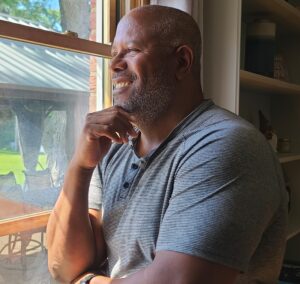
I used to think sales and voiceover were two completely different careers.
One was loud, competitive, quota-driven — a world of handshakes, follow-up calls, and “Is that the best price you can do?” and “Your competitor is doing it for less” and “Let me talk to my wife and get back to you.” The other was quiet, creative, performance-driven — a world of microphones and scripts and emotional authenticity.
Then one day I was sitting in my booth, prepping for an audition, and I caught myself thinking about a client I hadn’t heard from in a while. And I thought: I know exactly how to handle this. Not because I read a voiceover business book. Because I spent over 20 years doing exactly this in two completely different industries.
Ten years selling cars. Ten+ years selling labels and plastic films to commercial printing companies. Two different worlds. Two very different types of clients. And a master class in what actually moves people from “maybe” to “yes.”
Here’s what I brought with me when I walked into the voiceover world — and why I think it makes me a different kind of collaborator than most talent you’ll work with.

The Lesson the Car Lot Taught Me (That Most Voice Actors Never Learn)
My decade of selling cars taught me this — the person walking through the door almost never tells you what they actually need. And if you’re paying attention on a car lot, you figure that out fast.
They’ll say, “I’m just looking.” What they mean is: I don’t trust you yet.
They’ll say, “I want something practical.” What they mean is: I just went through a divorce and I’m rebuilding, and I need to feel like I made a smart decision.
They’ll say, “Just give me your best price.” What they mean is: I’ve been burned before and I don’t want to feel stupid.
Sales — real sales, consultative selling — is about hearing the thing underneath the thing. It’s about asking better questions than the ones you’re tempted to ask, listening longer than feels comfortable, and figuring out what someone actually needs so you can actually help them.
Here’s the voiceover parallel: clients don’t always know how to ask for what they need either.
Sometimes a creative director says “conversational” when what they mean is “warm but authoritative.” Sometimes a producer says “energetic” when what they mean is “punchy but not salesy.” Sometimes a client says “just do what you think is right” when what they mean is “I trust you enough to let you lead, but I’m quietly hoping you nail it.”
Quotable takeaway: Booking voiceover work isn’t about sounding like what the client asked for. It’s about understanding what they actually need — and delivering that.
The sales floor taught me to listen past the surface. That skill transferred directly. If you want to go deeper on what clients are really looking for, I wrote about that directly in What Clients Actually Want From a Voice Actor (But Rarely Say Out Loud).

Ten Years of B2B Sales and the Art of the Long Game
If the car lot taught me to listen, a decade in the commercial printing industry taught me something harder: patience.
B2B sales cycles are long. You might make 15 touches with a prospect before they even take your call seriously. You might pitch a company for two years before they give you a shot at their business. And if you go into that process treating every follow-up like a desperate bid for attention, you will lose every single time.
The secret I figured out — and this took me longer than I care to admit — is that follow-up done right isn’t annoying. It’s a service.
When I’d check back in with a buyer and say, “Hey, I saw that there’s been some recent consolidation in paper suppliers — I thought you might want to talk through how that affects your label paper printing,” I wasn’t pitching. I was being useful. I was showing them I understood their world. And that, over time, is what turns a vendor into a trusted partner.
Now I’m in voiceover, and I watch a lot of talent treat their follow-up like an apology. “Sorry to bother you again, just wanted to check in…” That’s not follow-up. That’s self-erasure.
I check in differently. I make it about them. I reference something specific. I keep it short. I give them a reason to respond that isn’t just “please hire me.”
Quotable takeaway: Consistent, value-driven follow-up isn’t a nuisance — it’s a differentiator. The talent who shows up with something useful gets remembered.
Production companies and agencies are busy. If you can remind them you exist while also making their life slightly easier, you’re not a pest. You’re a pro.
What Consultative Selling Actually Looks Like in the Booth

“Consultative selling” gets thrown around a lot in sales training. It sounds polished. What it actually means, in practice, is pretty simple: you stop trying to sell and start trying to solve.
In the printing industry, I wasn’t just selling blank sheets of labels and plastics. I was solving a problem — a packaging problem, a logistics problem, a brand consistency problem. My job wasn’t to push a product. It was to understand the client’s operation well enough that my solution made obvious sense.
I bring that exact mindset to voiceover.
When I get a project, I’m not just thinking about my performance. I’m thinking about the client’s deadline, their approval chain, their brand voice standards, their audience. I’m thinking about what happens after I deliver the files — who has to approve them, who might push back, what could go sideways.
And that shapes how I work.
What That Looks Like in Practice
- I ask clarifying questions before I start. Not because I don’t know what I’m doing, but because understanding the context makes my performance better and saves everyone time.
- I deliver options when the direction is open. If the specs give me creative latitude, I’ll often deliver two reads — a primary and an alternate — so the producer has something to work with rather than having to go back for a pickup.
- I flag potential issues early. If I think a pronunciation is ambiguous, or if the phrasing in a script feels off for the intended audience, I’ll say so before I record — not after.
- I meet deadlines without drama. This shouldn’t be a differentiator, but apparently it is. Sales taught me that being reliable is a competitive advantage. I don’t miss turnarounds.
Quotable takeaway: The voice actor who thinks like a collaborator — not just a performer — is the one who gets called back.
That consultative instinct isn’t taught in acting class. It comes from years of figuring out how to make someone else’s job easier, faster, and less stressful. Archbold Media Services was built on that philosophy from day one.
The Sales Skill That Transfers Directly to Voiceover (Most People Overlook This One)

There’s a specific skill that separates good salespeople from forgettable ones. It’s not closing. It’s not prospecting. It’s not even relationship-building, exactly.
It’s this: knowing when to shut up.
In sales, the instinct when you’re nervous is to fill silence. Keep talking. Keep pitching. Keep trying to convince. And every experienced sales trainer will tell you the same thing: that’s the worst thing you can do. You make a strong case, you ask a good question — and then you let the silence do the work.
The ability to hold space, to trust that you’ve said what needed to be said, to not oversell — that’s a sales skill. And it is also, directly and completely, a performance skill.
Voice acting rewards restraint. The performers who try to do too much — who push every line, who color every word, who can’t let a beat breathe — they don’t book the work. The ones who can say a lot with a little, who understand that silence is part of the performance, who trust the material — those are the voices that keep getting called.
I didn’t learn that in the booth. I learned it across a desk from a buyer who was deciding whether to trust me.
Knowing when to stop talking — in a sales meeting, in a negotiation, in a recording session — is a discipline. And I genuinely believe that decades of consultative sales work made me a better voice actor than I would have been if I’d come to this work straight from performance training alone.
Why Any of This Matters to You (If You’re the One Hiring)

If you’re a producer, a creative director, or a casting agent reading this, here’s the honest version of what I’m trying to say:
Working with a voice actor who’s only ever been a voice actor is fine. You’ll get a performance. You might get a great one.
But working with someone who spent 20+ years learning how to read a room, ask the right questions, adapt when the client’s needs shifted mid-conversation, follow up without being annoying, and make the other person feel heard — that’s a different experience.
I’m not trying to be your salesperson. I’m trying to be your collaborator. And I know from experience that the best collaborations happen when both sides feel like the other person gets what they need.
I get it. I spent over 20 years making sure of that.
As SalesEthics puts it, putting the customer first means setting aside your own agenda long enough to actually understand their stresses — and proving that mindset through consistent listening and follow-through, not just claiming it. That’s not a soft skill. It’s a competitive one.
And if you want to set that collaboration up for success from the very first conversation, How to Write Better Voiceover Specs (A Voice Talent’s Wish List) is a good place to start.

The Bottom Line
I’ve been thinking a lot lately about what all of these careers have actually taught me — not just the skills, but the deeper lessons underneath them.
And I keep coming back to the same idea:
Sales taught me how people think. On-camera acting taught me how people feel. Voiceover taught me how people listen.
And now, as I build out the business and digital side of what I do, technology is teaching me how people learn.
That’s not a resume summary. That’s a worldview. And it shapes every project I take on, every audition I submit, every follow-up email I send, and every time I step into the booth.
If you’re building a project and you want a voice actor who brings that kind of intentionality — who thinks about your deadline, your audience, and your approval chain, not just his next line — let’s talk.
Leave a comment below if this hit on something you’ve experienced from either side of the mic. And if you know a producer or creative director who’d find this useful, pass it along.
Follow the Cecil Sez Blog for more posts at the intersection of performance, business, and the work that actually books. And if you’re putting together a project that needs a voice — commercial, corporate narration, eLearning — I’d love to be in the conversation. Check out the voiceover demos at cecilarchboldvo.com.